What an Air Purifier’s CADR Number Actually Tells You
The Clean Air Delivery Rate is one of the more useful figures on an appliance box — if you know what it measures, what it leaves out and how to size it for your room.
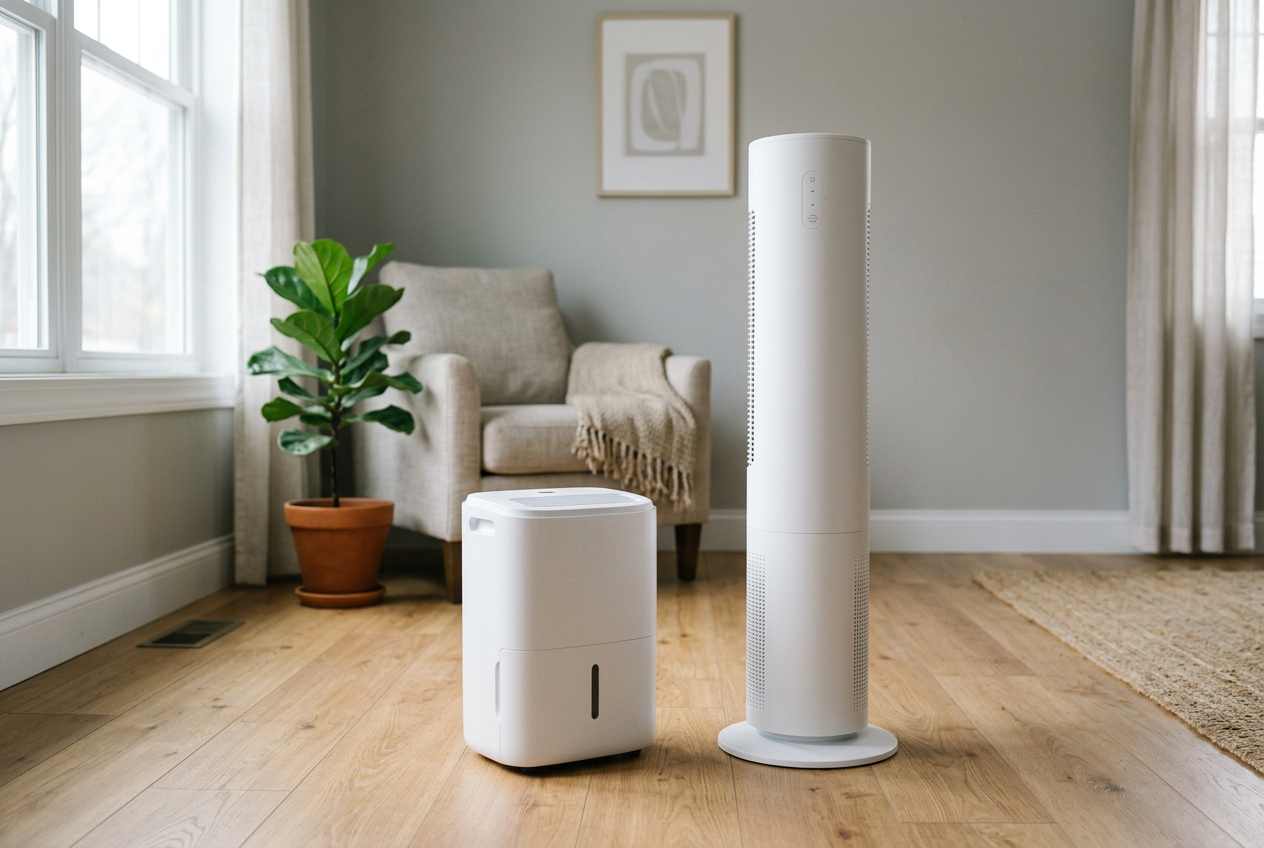
Every air purifier box carries a number that sounds technical enough to settle the question: the Clean Air Delivery Rate, or CADR. It is one of the more useful figures in home appliances, but only if you know what it measures, what it leaves out and how to match it to the room you actually have.
What CADR measures
CADR describes how much filtered air a purifier delivers, expressed in cubic feet per minute, for three types of particles: tobacco smoke, dust and pollen. The figures come from a standardized test method published by the Association of Home Appliance Manufacturers, ANSI/AHAM AC-1, which allows shoppers to compare models on the same terms.
Because smoke particles are the smallest of the three, the smoke figure is usually the lowest and the most demanding. If a manufacturer lists only one number, it is worth checking which particle type it describes.
What it does not measure
CADR is a particle metric. It says nothing about gases, odors or volatile organic compounds, which depend on different filter media such as activated carbon. It also does not capture noise, filter replacement cost or how a machine performs on its quieter settings, where many people run purifiers most of the time.
A purifier sized for a larger room, run on a lower setting, is often quieter in practice than a smaller unit running flat out.
Matching the number to your room
A widely cited rule of thumb from AHAM is that a purifier’s smoke CADR should be at least two-thirds of the room’s floor area in square feet. A 300-square-foot bedroom would call for a smoke CADR of roughly 200.
That guideline assumes a standard ceiling height. Rooms with vaulted ceilings, open floor plans or frequent door traffic hold or exchange more air and benefit from extra capacity.
- Measure the room’s floor area and note the ceiling height.
- Multiply the area by two-thirds to estimate a minimum smoke CADR.
- Add headroom if you plan to run the unit on low or medium settings.
- Check the replacement filter price and recommended interval before buying.
Filters, seals and the fine print
A high CADR depends on air passing through the filter rather than around it, so look for a filter that seats firmly in its housing. Phrases such as “HEPA-type” or “HEPA-like” are not the same as a true HEPA designation, and the wording on the box deserves a careful read.
The U.S. Environmental Protection Agency’s guide to air cleaners in the home describes portable purifiers as one part of improving indoor air, alongside reducing sources of pollution and ventilating with outdoor air where practical.
Ozone-generating devices
Some devices marketed as air cleaners produce ozone intentionally, and the EPA advises against using ozone generators in occupied spaces. If a product lists an ionizer or similar feature, check whether it can be switched off and whether the model is certified under California’s air cleaner regulations.
The short version
Use CADR to narrow the field, size for your room with some headroom, and weigh the ongoing cost of filters as seriously as the purchase price. The most effective purifier is usually the one quiet enough that you leave it running.